ANSI Z359 / CSA / EN 362

Spidergard Fall Protection Equipment

Spidergard publishes what unfamiliar safety brands usually hide: an 11,200 lb major-axis rating, a 3,600 lb gate rating, and a 4.74-star average from 664 verified buyers.

  • 11,200 lb major, 3,600 lb gate
  • Twist auto-lock resists gate creep
  • ANSI, CSA, EN stamps on every unit
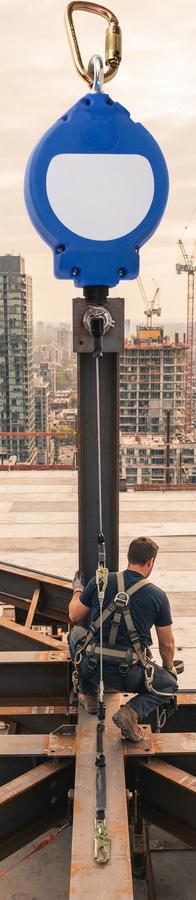
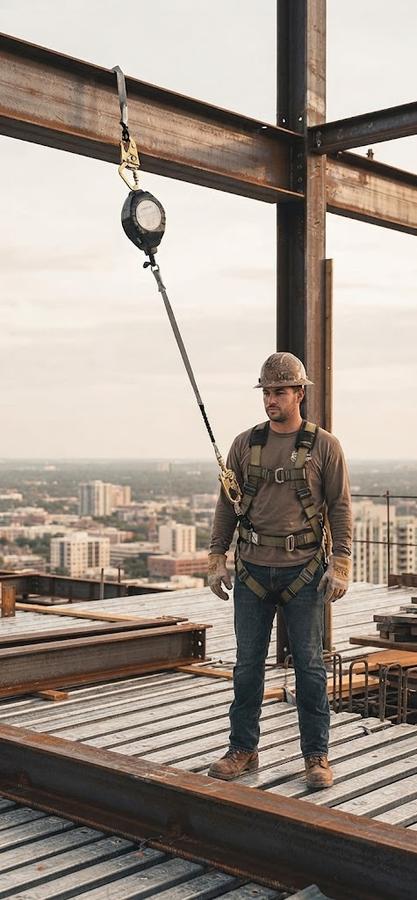
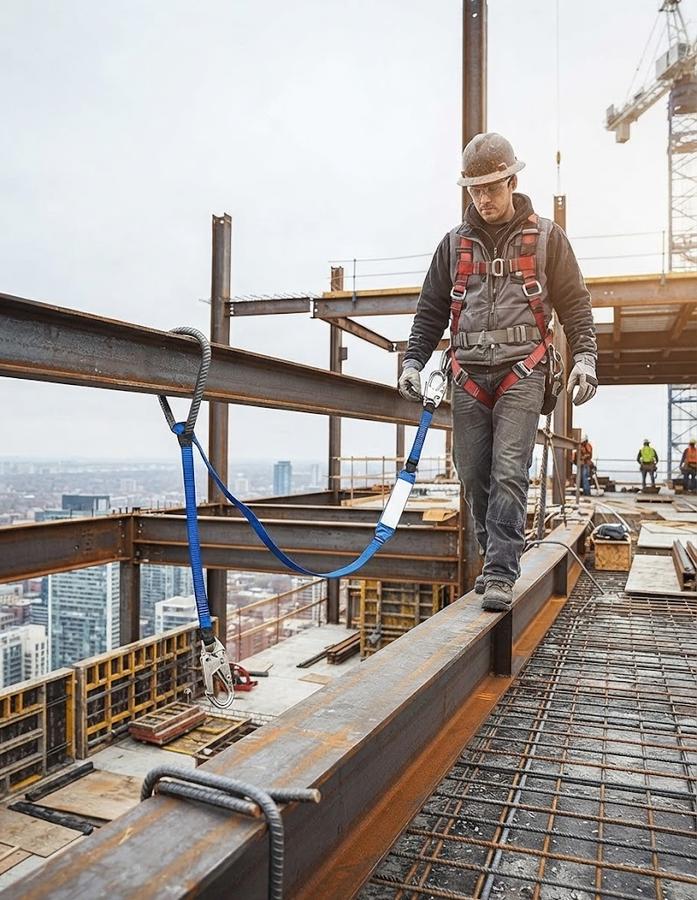
Worker in a full-body harness clipped to a steel beam on an open deck
4.74★Average rating
664Verified buyer reviews
11,200 lbMajor-axis rating, S01813
30-dayReturns through the retailer

Connectors, lanyards, anchors, and lifelines

Connectors, lanyards, anchor straps, rope grabs, and retracting lifelines from 8 ft to 50 ft, each carrying its own stamped ANSI line.

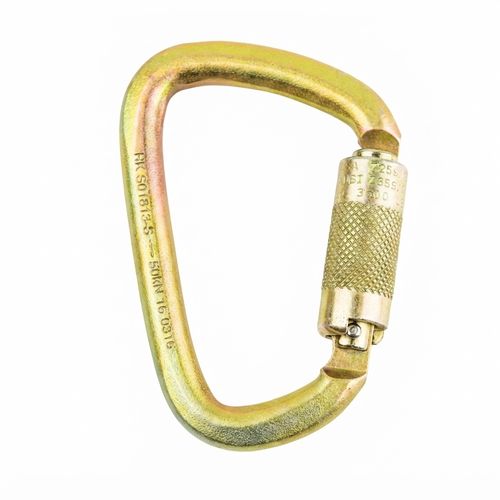
S01813 Steel Locking Carabiner, 50 kN

S01813 Steel Locking Carabiner, 50 kN

★ 4.8 (564 reviews)

Snag a carabiner sideways against a rung and the load lands on the gate, not the spine, which is where cheap connectors let go. A foreman comparing spec sheets finds 3,600 lb across the gate and 11,200 lb along the major axis printed on the body. Release the twist collar with a gloved thumb and it auto-locks in a half-turn, the whole ritual before you move on. Where a non-locking clip rolls open against steel under three-directional loading, this D-shape holds force on the strongest section. Hold the spine up at inspection and a competent person reads ANSI Z359.12-09, CSA Z259.12-11, and EN 362:2004 stamped there.

  • Clip in with gloves through the 1 in gate opening; the spine holds 11,200 lb, the gate 3,600 lb
  • Let go of the twist collar and it auto-locks, so a rung snag cannot flick the gate open mid-climb
  • Check the stamp at every pre-use inspection: ANSI Z359.12-09, CSA Z259.12-11, and EN 362:2004 trace straight off the body
Check price
01515 Rope Grab with Connecting Eye

01515 Rope Grab with Connecting Eye

New listing

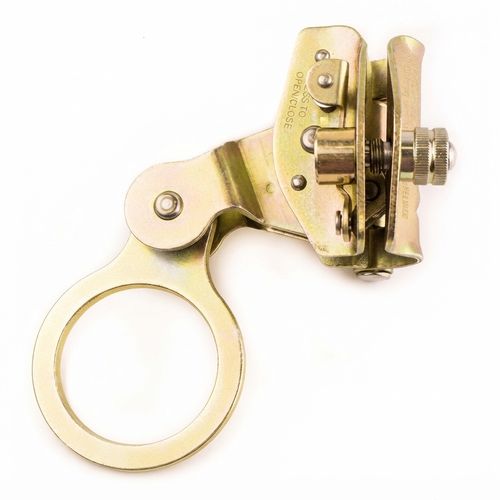
Switching from a 1/2 in lifeline to a 5/8 in rope mid-project usually means a second grab in the bag. Clamp the 01515 onto either line and it grips 13mm through 16mm, carrying you plus tools from 130 lb to 310 lb. Its automatic lock system grabs the rope the instant the line accelerates, so a slip on a steep slope arrests where you stand rather than at the end of a run. Where a friction hitch loosens after a wet shift, forged steel keeps its clamping geometry season after season. Read the unit at every pre-use inspection: ANSI Z359.18-2017 Type T, ANSI A10.32-2004, OSHA CFR 1926.502. Order the five-unit pack and a crew clips in off one delivery.

  • Slide one grab between a 1/2 in and a 5/8 in lifeline mid-shift, at 130 lb to 310 lb with tools
  • Slip on a steep slope and the automatic lock bites the rope where you stand, no hand pressure needed
  • Check the ANSI Z359.18-2017 Type T and OSHA CFR 1926.502 marks on the unit at every pre-use inspection
Check price
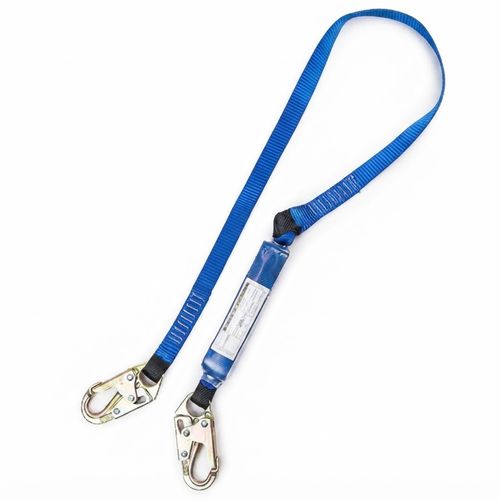
SPLD001 6 ft Energy-Absorbing Lanyard

SPLD001 6 ft Energy-Absorbing Lanyard

★ 4 (2 reviews)

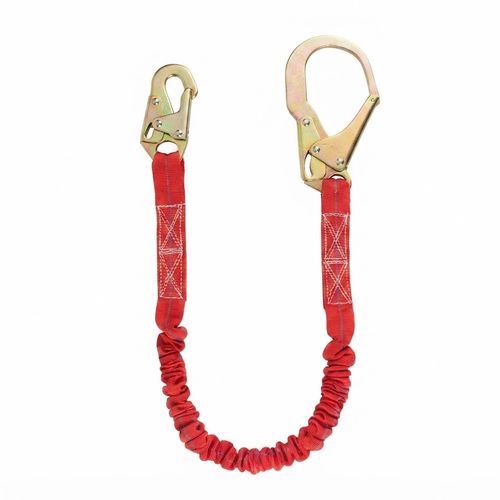
Fall 6 ft onto a fixed lanyard and the shock spikes past what a spine tolerates, which is the whole reason this one is built to tear. Take a 6 ft fall on the SPLD001 and its stitched polyester core opens in stages, holding average arresting force near 900 lb. Maximum deployment runs 48 in, so you need that much clearance below the anchor before you clip. A snap hook lands on the harness end and a rebar hook on the anchor end, which saves carrying an extra connector up the ladder. A restraint lanyard only keeps you back from the edge; clip this one and it catches the 6 ft fall itself.

  • Fall 6 ft on it and the pack bleeds the peak to roughly 900 lb across a 130 to 310 lb user range
  • Pull the webbing through your hands at inspection: the tear-stitch pack opens in stages, never all at once
  • Check 48 in of maximum deployment below your anchor before you clip, since this one is rated to arrest
Check price
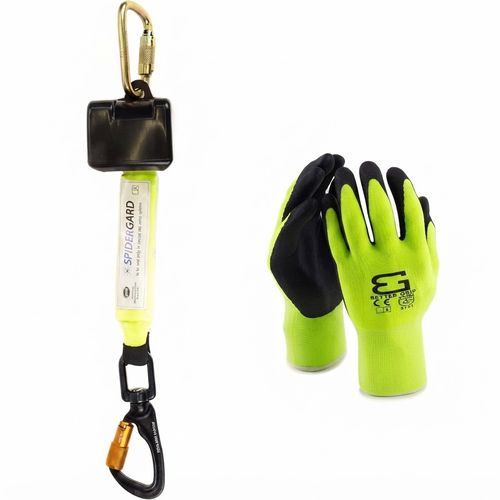
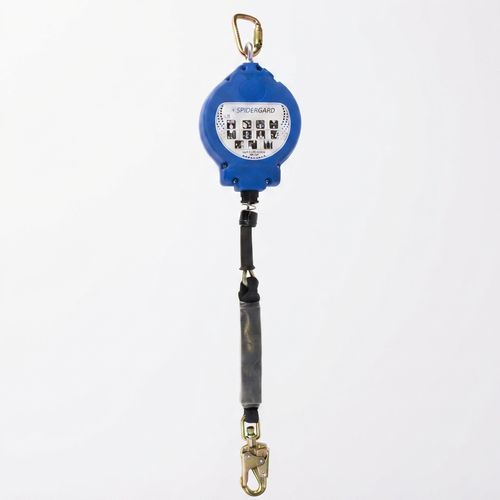
SPL-RW8 8 ft Retractable Lifeline

SPL-RW8 8 ft Retractable Lifeline

New listing

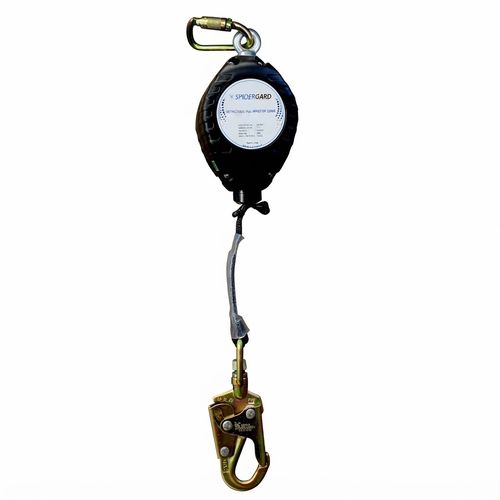
Leaning out of a bucket at 30 ft leaves slack in a fixed lanyard, and slack turns straight into free-fall distance. This 8 ft retracting unit takes that slack up as you shift weight, then locks the instant the webbing accelerates. Walk the platform and the inertial brake lets webbing pay out freely, then grabs the instant your fall accelerates it. Where a 6 ft lanyard demands full clearance below your D-ring at all times, a shorter working range plus constant tension suits tight platform work. Drop the housing on a deck plate and the steel frame under the PVC cover takes it; ANSI Z359.13-2013 prints on the label. Pull the micro-foam gloves from the box for the first tie-off.

  • Retracts a full 8 ft of polyester webbing so a lean over the rail never leaves slack in the line
  • Walk the deck at working pace and the line follows; lean out at 30 ft and the brake still locks
  • Check the ANSI Z359.13-2013 line on the housing label before you sign the inspection log
Check price
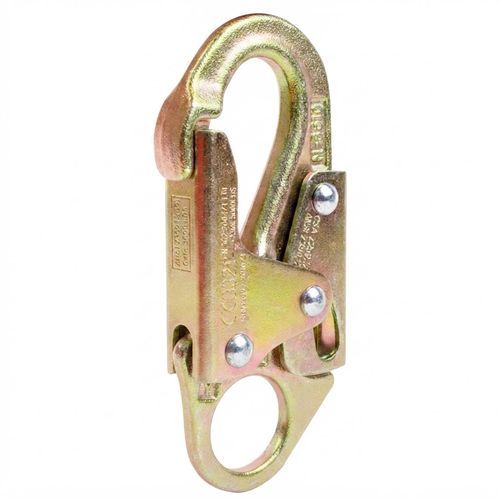
SPFSH-001S Forged Steel Snap Hook

SPFSH-001S Forged Steel Snap Hook

★ 4.7 (48 reviews)

Reaching back over your shoulder in a harness, a 3/4 in gate opening is the difference between clipping in and fumbling with gloves on. Load the SPFSH-001S nose against a beam edge and forged steel holds 23 kN, because the grain flow follows the nose. A double-action gate takes two separate motions to open, so it cannot roll open against a rung during a descent. Pull a stamped hook sideways off a rung and its throat bends; the forged section holds through the same load. Zinc plating keeps the gate spring moving after a winter in an open truck bed. Check the hook body at each pre-use inspection for ANSI Z359.12-09, CSA Z259.12-11, and EN 362:2004.

  • Reach back one-handed and the 3/4 in gate clears a dorsal D-ring with gloves on, at 23 kN breaking strength
  • Drag the gate along a rung during a 6 ft descent and two separate motions are still needed to open it
  • Trace ANSI Z359.12-09 and EN 362:2004 on the hook body when you sign the inspection log
Check price
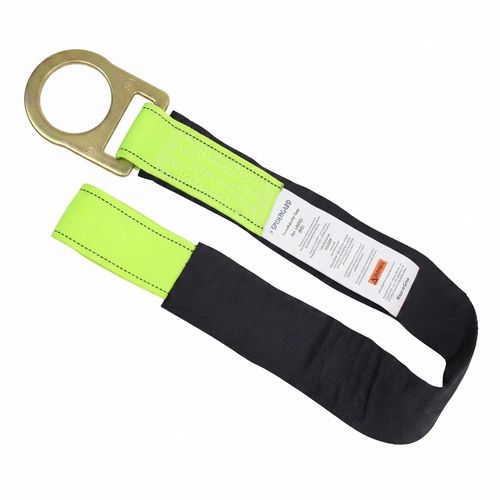
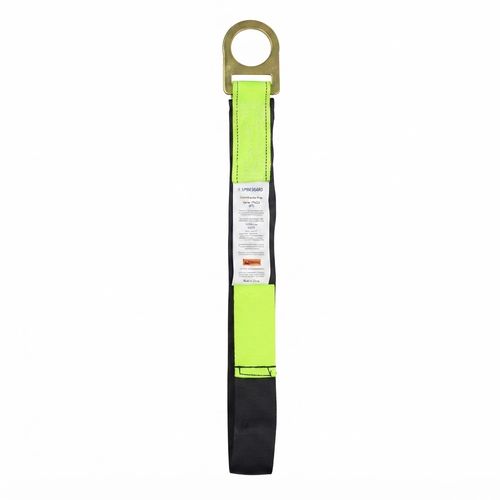
SPA203 8 ft Concrete Anchor Strap

SPA203 8 ft Concrete Anchor Strap

★ 5 (1 reviews)

Stand on guardrail tubing and it feels solid, yet it misses the 5,000 lb anchorage floor OSHA CFR 1926.502 sets per worker. Wrapping this single-unit anchor strap around structural steel gives you a tie-off point built to that breaking strength, with a 400 lb maximum user capacity counting body weight plus tools. Heavy-duty protective sheathing sits between the webbing and the edge, so a concrete corner cannot saw through during arrest. Leave the D-ring end in coastal salt air for a season and the stainless hardware still turns clean. One detail decides how you store it: the strap is disposable and intended for single use, so an arrested fall retires it that day.

  • Weigh yourself with a loaded tool belt before you clip: a 400 lb user cap on 5,000 lb breaking strength
  • Wrap it over a concrete parapet and the sheathing takes the edge instead of the webbing during arrest
  • Read the tag the day it arrives: ANSI Z359.18-2017 Type T, OSHA CFR 1926.502, single use only
Check price
SPA203 8 ft Anchor Strap, Sheathed

SPA203 8 ft Anchor Strap, Sheathed

New listing

Twelve retired anchor straps on a Friday inspection means twelve replacements clipped on Monday, not four weeks of chasing single orders. This 25-unit case pack covers a whole site restock in one delivery, and every strap inside carries its own 5,000 lb breaking strength and 400 lb user cap. An 8 ft loop-and-D-ring build wraps larger structural columns that a shorter strap cannot reach around. Pull any strap from the case at Monday inspection and its tag reads identical to every other one in the box. Retire a strap the day it arrests a fall and pull the next one from the case, because each is single-use.

  • Wrap an 8 ft strap around a column a short one cannot reach; 25 more sit in the case for Monday
  • Run the strap over a concrete parapet and the sheathing takes the abrasion during arrest
  • One case keeps a crew on identical documentation instead of mixed tags after a failed inspection
Check price
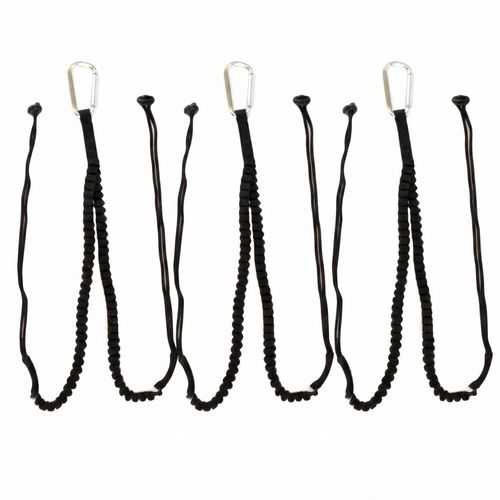
SPTOOL21 Double-Leg Elastic Tool Lanyard

SPTOOL21 Double-Leg Elastic Tool Lanyard

★ 4.3 (2 reviews)

Working two-handed on a lattice means one tool in your grip and one hanging, which is where a double-leg tether earns its keep. Elastic legs pull back to a short retracted length between uses, so neither cord dangles into a rung or a moving part. Clip one carabiner to your belt loop and both legs hang off a single point you can check in seconds. Where a fixed cord catches on steel and yanks the tool out of your hand, elastic absorbs the swing instead. Hang a wrench on it above a crew and nothing reaches the deck; the rating covers hand tools, never a worker. Three tethers per pack kit two workers off one box on the first morning.

  • Two elastic legs from one carabiner keep a wrench and a driver tethered while you work two-handed
  • Let go of a driver and the elastic leg snaps back short, clear of the rung and the rotating parts
  • Read the capacity on the product tag before first use: tool tethering only, never a person
Check price
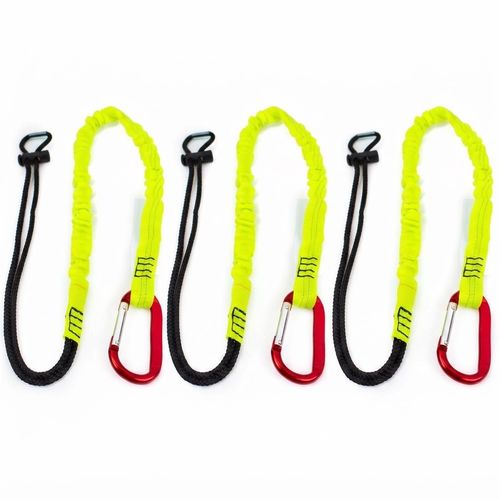
SPTOOL01 3 ft Tool Lanyard, Two Sets

SPTOOL01 3 ft Tool Lanyard, Two Sets

New listing

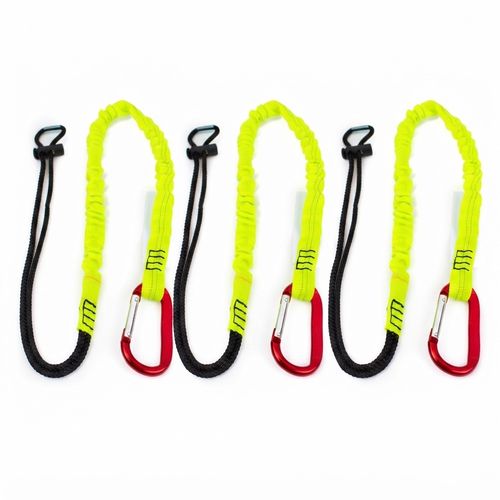
Kit two workers off one box: three lanyards across two sets, each cord rated to a 15 lb maximum for hand tools. A driver sliding off a scaffold plank drops onto the energy-absorbing cord, and the nylon core takes the shock at arm's length. Thread the loop end through a captive handle on the first morning, then clip the aluminum carabiner to your belt. Where a bulky tether hangs up on scaffold tube every time you turn, this low-profile cord rides flat against the leg. Read the tag before first use: 15 lb tool tethering only, never fall arrest, never a person.

  • Hang a driver or a hand wrench on the 3 ft cord at height, up to a 15 lb maximum per lanyard
  • Catch the drop on webbing instead of tendons: the nylon core stretches through every jerk up to 15 lb
  • Tool-tethering rating prints on the tag; check it before the cord ever clips anywhere near a harness
Check price
SPL-RR50 50 ft Wire Rope Lifeline

SPL-RR50 50 ft Wire Rope Lifeline

★ 5 (1 reviews)

A tower tech 45 ft up the lattice needs reach that a 6 ft lanyard cannot give without leaving slack in the line. Fifty feet of 7x19 galvanized steel cable pays out from this drum as you climb, then locks under sudden acceleration, capping maximum arresting force at 1,800 lb. A leading-edge build handles the case where the cable runs over a sharp roof or beam edge during arrest. Run the cable over a beam edge for a full shift and 3/16 in of galvanized wire keeps its cross-section where webbing would abrade. A swivel hook stops the line twisting as you rotate around a column, and certification runs to ANSI Z359.14. The 22 lb housing clips to a beam trolley once and rides there all shift.

  • Climb 45 ft of lattice and 50 ft of galvanized cable pays out behind you, capped at 1,800 lb arresting force
  • Rotate around a column all morning and the swivel hook keeps the cable from twisting into a kink
  • Show a competent person the ANSI Z359.14 mark on the housing before any leading-edge tie-off
Check price
SPL-S102 Shock-Absorbing Lanyard

SPL-S102 Shock-Absorbing Lanyard

★ 5 (6 reviews)

Cross from one anchor point to the next without ever going unclipped: hook one end onto the new beam before the old end comes off. The elasticated core inside this 6 ft build stays tucked while you work a rebar cage, then opens under arrest load. Both ends lock double: clip a forged snap hook to your harness D-ring and drop the rebar hook over scaffold tube. Where a rigid lanyard trails a slack loop that catches on steel at every step, the elastic core keeps the line short. Read ANSI Z359.13-2013 off the energy-absorber tag at your next inspection; this lanyard arrests falls and never tethers tools.

  • Reach 6 ft between anchor points while the elastic core stays short until a move needs its full length
  • Load it in a fall and the internal shock absorber opens, so peak force never reaches the harness attachment at full value
  • Check ANSI Z359.13-2013 on the absorber tag at every pre-use inspection before the lanyard goes back in the bag
Check price
SPL-RW11 11 ft Retractable Lifeline

SPL-RW11 11 ft Retractable Lifeline

New listing

Count the connectors between your harness and the lifeline: every extra one is another gate you inspect before each shift. Terminating in a snap hook, this 11 ft retractable clips directly to a dorsal D-ring with nothing added between. Drop the steel housing on a deck plate and it keeps winding, where a plastic drum cracks. Webbing pays out as you move across the platform and takes slack back up when you step in. Where a fixed lanyard leaves a loop trailing at your ankles, constant retraction keeps the line clear. Read the housing label at sign-off and OSHA and ANSI fall-protection markings are printed there.

  • Clip the snap hook straight to your dorsal D-ring and work an 11 ft range with no extra link
  • Retraction takes slack up as you step in, so no loop trails at your ankles on a platform
  • Copy the OSHA and ANSI markings off the housing into your inspection record on day one
Check price
SPTOOL01 3 ft Tool Lanyard, Aluminum Carabiner

SPTOOL01 3 ft Tool Lanyard, Aluminum Carabiner

★ 4 (40 reviews)

One dropped wrench from a lattice tower becomes a strike hazard long before it reaches the fence line. Clip a 3 ft cord to a wrench, a driver, and a set of pliers, each rated to a 15 lb maximum. Energy-absorbing tubular-nylon webbing stretches through the jerk when a tool slips, so the shock never lands squarely on your wrist. A single-action aluminum carabiner keeps the attachment light enough that you forget it is on the belt. Where a heavy steel tether adds weight you feel by hour six, aluminum does not. Read the tag before it ever reaches a harness: 15 lb hand tools only, never a worker's fall.

  • Hang a driver, a wrench, and a set of pliers on 3 ft cords rated to 15 lb each
  • Let a tool slip off a platform and the tubular-nylon webbing stretches through the jerk before your wrist feels it
  • Rated 4.0 stars across 40 verified buyer reviews from crews running daily tool tethers
Check price
The arrest chain

How the Chain Arrests a Fall

Clip in once and the load runs anchor to connector to lanyard, then into the absorber that bleeds peak force toward 900 lb.

  1. 1

    Anchor and Connect

    Wrap the SPA203 strap around a structural beam and clip the D-ring in before the first tie-off of the shift.

  2. 2

    Lock the Gate

    Release the S01813 twist collar and it rotates shut in one half-turn, so a rung snag cannot flick the gate open.

  3. 3

    Let the Line Ride

    SRL webbing pays out behind you as you cross the deck; it locks the instant a fall accelerates past working speed.

  4. 4

    Absorb the Force

    Take the fall and the stitched polyester tears row by row, so peak arrest load lands far below the ANSI ceiling.

Rated use cases

The Jobs This Hardware Was Rated For

Reach, corrosion, connection, and anchorage decide these purchases, and each one carries a published figure from 1,800 lb down to 400 lb.

SPL-RR50 50 ft Wire Rope Lifeline in use on site

Match the Lifeline to the Job Height

The SPL-RR50 pays out 50 ft of wire rope as you climb, capped at the same 1,800 lb arresting force as the 8 ft unit. A roofer 15 ft above deck and a tower tech 45 ft up need different reach, not different force limits. Measure your fall clearance first, then read the ANSI Z359.14 line on the housing label before the first tie-off.

  • Clip the 22 lb SPL-RR50 to a beam trolley at 45 ft and its 7x19 galvanized cable pays out as you walk the steel.
  • The 3/16 in cable diameter keeps the drum compact, so the housing still swings clear of a bucket-truck rail.
  • Where a fixed 6 ft lanyard needs full clearance below your D-ring, the retracting drum keeps slack out of the line all shift.
See the SPL-RR50 50 ft Wire Rope Lifeline
SPFSH-001S Forged Steel Snap Hook in use on site

Gear That Does Not Rust Out After One Wet Season

Zinc plating on the SPFSH-001S snap hook keeps the gate spring moving after eight months in an open truck bed. Corrosion protection runs by line here: plated forged hooks, stainless anchor-strap hardware, galvanized steel on the wire-rope drum. Order a single hook to replace one retired unit, or a case pack when a crew restocks after inspection day.

  • Thumb the gate on a hook that wintered outdoors and it still snaps closed, because the plating never let rust reach the spring.
  • Stainless D-ring hardware on the anchor strap holds shape after a season of coastal salt spray, no pitting at the sewn eye.
  • A 25-unit case pack restocks a whole crew the week after a failed inspection, instead of chasing single replacements for a month.
See the SPFSH-001S Forged Steel Snap Hook
SPL-RW11 11 ft Retractable Lifeline in use on site

Connect Straight to the Harness, No Extra Link

The SPL-RW11 retractable clips straight to your dorsal D-ring and pays out an 11 ft working range, with no extra connector added between. Each added link in the chain gives a competent person one more gate to open and log at sign-off. Clip the SPL-S102 lanyard at both ends and two forged-steel hooks carry the same load, one at the harness, one at the anchor.

  • Reach back over your shoulder in a harness and the SPFSH-001S opens on a 3/4 in gate, wide enough for a dorsal D-ring with gloves on.
  • The double-action gate needs two separate motions to open, so it will not roll open against a rung during a 6 ft descent.
  • Load the hook nose against a beam edge and 23 kN of forged steel holds, because the grain flow follows the nose.
See the SPL-RW11 11 ft Retractable Lifeline
SPLD001 6 ft Energy-Absorbing Lanyard in use on site

Tie Off to a Point That Can Actually Hold You

The SPA203 strap wraps a structural beam and holds to the 5,000 lb anchorage floor OSHA CFR 1926.502 sets per worker. Kick a conduit hanger on a deck and it feels solid, yet it fails that same test every time. Run the SPLD001 lanyard off a rated strap every time you move anchor, never off the first pipe within arm's reach.

  • Loop the sheathed strap around a 12 in structural column and the protective jacket keeps the edge from chewing the webbing during arrest.
  • Add your body weight plus a 20 lb tool belt before you clip, because the 400 lb cap counts everything hanging off the D-ring.
  • Thumb the S01813 collar shut before you weight the line: a locking collar holds under the three-directional load that springs a non-locking clip.
See the SPLD001 6 ft Energy-Absorbing Lanyard
Published figures

Why the Load Numbers Hold Up

Spidergard publishes gate strength, arresting force, and user capacity as figures a competent person can check against the standard.

  1. 01

    Hold a 5,000 lb Tie-Off Without Drilling

    Wrap the SPA203 strap around a steel column, clip the D-ring, and your tie-off point clears the OSHA anchorage floor in under a minute.

  2. 02

    A Dropped Impact Driver Stops at Your Wrist

    A 15 lb driver slides off the platform edge and jerks to a halt on the SPTOOL01 nylon cord, four feet short of the deck below.

  3. 03

    900 lb Average Arresting Force, Not an Adjective

    Stitched polyester inside the SPLD001 lanyard tears in stages through a 6 ft fall, holding average arrest load to roughly half what a rigid line transmits.

  4. 04

    23 kN Snap Hook Clips Straight to the Harness

    One gloved thumb pushes the SPFSH-001S double-action gate open, and it self-locks onto a dorsal D-ring before you let go.

  5. 05

    Wet-Season Hardware That Still Snaps Shut

    Stainless hardware on the anchor strap and zinc plating on the forged hooks shrug off eight months of rain in an open truck bed.

  6. 06

    Every Rated Number Traces to a Dated Test Line

    Compare the ANSI Z359.18-2017 Type T line woven into the anchor tag against the breaking strength claimed for it, before your first tie-off.

Buyer reports

Three winters of tie-off cycles, in buyers' words

Verified buyers describe arborist rigging, mooring chains, and belt-hung hand tools, and they rate the hardware 4.74 stars across 664 reviews.

★★★★★
I use these for rigging. I am an arborist and I do hazardous tree removal, so these are ideal. I replaced all my triple-locking carabiners with them, because the triple-locking ones are difficult to work one-handed and I much prefer this gate. Several months in, I could not ask for better.
Verified Purchase · S01813 Steel Locking Carabiner, 50 kN
★★★★★
Best carabiner I have owned. I have worked with a lot of them and never seen one this versatile and this strong. Eighteen months of use and no damage at all. The best part is that it fits just about every work chain, where most carabiners strong enough to matter will not pass through the link.
Verified Purchase · S01813 Steel Locking Carabiner, 50 kN
★★★★★
I keep this on my turnouts in case I have to bail out, or need a munter hitch to lower something. The auto-lock gate is good and can be worked easily enough with thick gloves on. I have not had to use it in earnest, but I do not worry about whether it will work when I do.
Verified Purchase · S01813 Steel Locking Carabiner, 50 kN
★★★★★
I gave it four stars only because I have not had a real chance to use them yet. I bought two and they arrived three days earlier than the estimate. They feel heavy duty in the hand and unclipping is smooth. They are going on my arborist climbing and roping kit this season.
Verified Purchase · S01813 Steel Locking Carabiner, 50 kN
★★★★★
I bought these to replace an older set that had gone rusty. These are larger and look more heavy duty than the set they replaced, and I got about five years out of those. Mine live on the mooring chains of a 57 foot houseboat, so they take weather year round. They are strong.
Verified Purchase · SPFSH-001S Forged Steel Snap Hook
★★★★★
It appears really well made and it carries the safety ratings I need on the job. Never a problem with it since. It does the job it is meant to do, with reliability, which is all I want from a connector that goes between me and an anchor point.
Verified Purchase · SPFSH-001S Forged Steel Snap Hook
★★★★★
I ordered this hook to finish making my split-tail climbing flip line. The hook adds just enough weight that I can swing it around the trunk and grab it on the far side to clip in. That one detail is what sold me on keeping a second one in the truck.
Verified Purchase · SPFSH-001S Forged Steel Snap Hook
★★★★★
A handy little accessory for hanging tools off the belt while I work at height. Good value and it works as described for light hand tools. I run one on the pliers and one on the tape and neither has come loose on me.
Verified Purchase · SPTOOL01 3 ft Tool Lanyard, Aluminum Carabiner
★★★★★
The gates stick open on the aluminium carabiner and do not quite line up out of the bag, so I worked them a few times before use. The cords themselves are fine for light tools, which is what I bought them for.
Verified Purchase · SPTOOL01 3 ft Tool Lanyard, Aluminum Carabiner
Information gap

The Load Numbers Other Fall-Gear Pages Skip

Check gate strength, average arresting force, and tool rating before you buy, because Spidergard prints all three down to the 15 lb tether cord.

3,600 lb gate strength

Snag a carabiner sideways on a rung and the load lands on the gate, not the spine. The S01813 gate holds that rating, so the collar stays shut through a jolt that springs a cheap non-locking clip.

Open a competing carabiner page and the gate figure is missing, leaving you a major-axis number that says nothing about a sideways load.

manufacturer spec, stamped on the carabiner body

15 lb rated capacity

Tether an impact driver to the SPTOOL01 cord and a slip off the platform ends at your wrist, not on the slab below. Hang anything past 15 lb and the rating stops, so a rotary hammer rides the hoist line instead.

Buyers pricing a generic tool tether find no weight rating at all, so nobody can say whether a 12 lb cordless drill qualifies.

manufacturer spec

8 to 50 ft at 1,800 lb max arresting force

A roofer 15 ft above deck and a tower tech 45 ft up pick different reach off the same force ceiling. Clip the 8 ft webbing unit on a low roof and the 50 ft wire-rope drum on a lattice, both capped at 1,800 lb.

A wire-rope lifeline page names its length and stops, so you cannot tell whether the force cap holds at 8 ft and at 50 ft alike.

manufacturer spec, ANSI Z359.13-2013 and Z359.14

900 lb average arresting force

Fall 6 ft onto a fixed lanyard and the shock spikes past what a spine tolerates. Tear-stitched polyester inside the SPLD001 core bleeds that peak to an average of 900 lb before you swing to a stop.

Scan a shock-absorbing lanyard page and you get the pack described, never the average force your body takes during a 6 ft arrest.

manufacturer spec

130 to 310 lb across 1/2 to 5/8 in rope

Switch from a 1/2 in lifeline to a 5/8 in rope mid-project and the 01515 grab clamps both without a second unit in the bag. Step on the rope at 310 lb with a loaded belt and the same unit holds, down to a 130 lb apprentice.

Rope grab pages name one diameter, so you guess at the counter whether a single unit spans 1/2 in and 5/8 in.

manufacturer spec, ANSI Z359.18-2017 Type T

4.74 stars across 664 reviews

Crews running daily tie-off cycles on these connectors and lanyards rate the hardware 4.74 stars across 664 verified buyer reviews. Compare that count against other private-label safety brands and you rarely find 664 verified reviews behind a published rating.

A private-label safety brand with no public history rarely shows a verified review count this size beside its rating.

664 verified buyer reviews

Spidergard fall-arrest hardware laid out for pre-use inspection
Who builds this

A Private-Label Safety Brand That Prints Its Numbers

Rated at 50 kN, the S01813 carabiner shuts its gate behind a locking collar that a snag cannot flick open. Check the stamp before you clip in: ANSI Z359.12-09, CSA Z259.12-11, EN 362:2004. You get the gate figure too, the number most spec sheets omit. Build the connector, the lanyard, and the anchor from one certified chain.

Spidergard is a name you do not know, so turn the connector over and read its stamp before the first tie-off. Read that stamp and you find the rating most connector pages leave off: 3,600 lb across the gate, beside 11,200 lb along the spine.

Match those numbers against the spec line at inspection and you get ANSI Z359.12-09, CSA Z259.12-11, and EN 362:2004 on the connectors. Ask who builds them and the tag answers RK Industries Group, Inc., with ANSI Z359.18-2017 Type T printed on every anchor strap. Crews running daily tie-off cycles rate this hardware 4.74 stars across 664 verified reviews.

An arborist clipping in fifteen times a day gets a twist collar that locks with half a turn, gloves on, and a 1 in gate that swallows a rigging ring. Press a non-locking clip against that same rung and the gate can roll open while your weight is on it.

Sort the tool cords from the fall-arrest cords before either reaches a harness, because both coil the same way in a gang box. Tool lanyards here rate 15 lb and tether a driver so it cannot fall on the crew below. Clip a worker to a fall-arrest lanyard and its tear-stitch pack bleeds the peak to about 900 lb average arresting force. Tag them different colors on day one, because at 40 ft your life depends on which cord you clipped.

Read the full brand story
Before you clip in

What Crews Actually Worry About Before Clipping In

Crews stall at the same doubts before the first tie-off, and each one ends at a stamped figure or an OSHA CFR 1926.502 line.

The doubtWhat answers it

A strength claim from a brand nobody has heard of

Two rated axes, one stamp

Strip the marketing adjective off a connector before it reaches your harness, and a stamped number is all that should remain. Turn the S01813 over: 11,200 lb on the major axis, 3,600 lb across the gate, both traceable to ANSI Z359.12-09 and EN 362:2004. Hand it to a competent person on the same shift to check stamp against spec sheet, then log the result.

Clipping a tool lanyard where a fall-arrest lanyard belongs

Tool tether vs worker rating

Clip an SPTOOL01 cord to a driver at 40 ft and it holds 15 lb, and it will not hold a person for one second. Clip a worker in with the SPLD001 instead: a 130 to 310 lb user range with an energy absorber sewn into the webbing. Color and cord thickness look alike in a crowded gang box, so tag the tool cords separately before they reach a harness.

Trusting an anchor point somebody else installed

OSHA CFR 1926.502 anchorage floor

Somebody welded that anchor point two years ago, and nothing on it proves the 5,000 lb floor in OSHA CFR 1926.502. Put a boot on guardrail tubing and it does not flex, yet it misses that floor; treat it as unverified until documentation shows up. Wrap a rated SPA203 strap around structural steel instead, unless a pull-test record or a competent-person sign-off says otherwise.

Gear that took a fall and looks completely fine

Retire after one arrest event

Run your hands down a lanyard after an arrest and the sleeve looks intact, while the tear-stitch pack has already opened underneath. Any connector, lanyard, or SRL that arrests a fall comes out of service that day. Cut the SPA203 strap out of service that same afternoon, because its tag reads single use.

No warranty page to fall back on

Documentation in place of a warranty term

Search the box and every tag for a warranty term and you come up empty on this hardware. Read the tags instead: ANSI Z359.18-2017 Type T on the anchor strap, ANSI Z359.14 on the lifeline housing, CSA Z259.12-11 on the connectors. Trace any load figure on this page back and it lands on one of those dated lines at inspection.

No warranty term ships with this hardware, and the tags carry dated standards instead. Returns run 30 days through the retailer, so pick a rating and compare the specs.

Ownership timeline

From Unboxing to the Retirement Date

Read the stamp on day one, log the date-of-first-use, and a 50 kN connector still snaps shut after two winters in a truck bed.

  1. Day 1

    Before the first tie-off, read the stamp on the connector and match it to the spec line: ANSI Z359.12-09, CSA Z259.12-11, EN 362:2004. No warranty document ships in the box, so copy that stamp into your gear log the day it arrives. Write the date-of-first-use on the tag itself, because a competent person will ask for it at the first inspection.

  2. Week 1

    Clip in fifteen times a day and the twist collar on the S01813 becomes muscle memory: gloved thumb and forefinger, half a turn. Run the SPTOOL01 cords on your driver and pliers by the end of the week, and nothing hits the slab below.

  3. Month 1

    At your first documented inspection, pull each lanyard through your hands and look for a tear-stitch pack that has started to open. Check the SPL-RW8 retracts a full 8 ft without hesitation. Sign the inspection log the same day, because a competent person will pull it at the next audit.

  4. Year 1 and beyond

    A plated hook that has ridden an open truck bed through two winters still snaps shut on the spring. The SPA203 strap is a different story: one arrested fall retires it, because it is built for single use and the tag says so.

Ready for Day 1? Compare the 6 ft lanyard against the 11 ft retracting lifeline before you order.

Against the standard

Measured Against the Regulatory Floor

Published figures set against the ANSI Z359 minimums and OSHA rules a competent person checks before approving gear.

Published Spidergard figures set beside the regulatory minimum a competent person checks.
Measured onSpidergardRegulatory floor
Carabiner gate strength3,600 lb (16 kN) on the S01813, printed beside the major rating3,600 lb minimum — ANSI Z359.12
Major-axis breaking strength50 kN / 11,200 lb on the S01813 locking carabiner5,000 lb minimum — ANSI Z359.12
SRL maximum arresting force1,800 lb ceiling from the 8 ft webbing unit through the 50 ft wire-rope model1,800 lb cap — ANSI Z359.14
Anchorage breaking strength5,000 lb on the SPA203 strap, with a 400 lb maximum user capacity stated separately5,000 lb per worker — OSHA CFR 1926.502
Answers

Ratings, retirement dates, and what a competent person checks

Load figures, inspection intervals, and the line between a tool tether and a fall-arrest lanyard, answered against the stamp on the hardware.

What is Spidergard fall protection equipment?

Spidergard covers the connector, lanyard, anchorage, and lifeline links of a personal fall arrest system. The line includes locking carabiners, forged snap hooks, energy-absorbing lanyards, rope grabs, concrete anchor straps, and self-retracting lifelines from 8 ft to 50 ft. Manufacturing runs through RK Industries Group, Inc. Certification is stated per item against ANSI Z359, CSA Z259.12, EN 362:2004, and OSHA CFR 1926.502.

At what height is fall protection equipment required?

OSHA sets the trigger height by industry, not by a single universal number. Construction work generally requires fall protection at 6 ft above a lower level under 29 CFR 1926.501, while general industry uses 4 ft under 29 CFR 1910.28. Steel erection and scaffolding carry their own thresholds. Check the standard covering your specific work before deciding a task falls below the line.

What does a complete personal fall arrest system include?

Four components have to work together: an anchorage rated at 5,000 lb per worker, an anchorage connector such as a strap, a full-body harness, and a connecting means like a lanyard or self-retracting lifeline. Connectors join the links. A system missing any one of the four is not a fall arrest system, and gear rated for one role does not substitute for another.

Who manufactures this hardware?

RK Industries Group, Inc. appears as manufacturer of record across the product records for this line, including the connectors, lanyards, anchor straps, and retracting lifelines. Two records list a secondary brand name in the source data, but the store and the majority of listings resolve to Spidergard. Manufacturer details print on the item tag and on the housing label of the retracting units.

Is this hardware rated for occupational work or for sport climbing?

Certification here targets occupational fall arrest, not recreational climbing. The connectors carry ANSI Z359.12-09, CSA Z259.12-11, and EN 362:2004, and the anchor straps reference OSHA CFR 1926.502 and 1910.66. None of it is UIAA-certified for lead climbing, where repeated dynamic falls and different rope interactions apply. Sport climbers should shop UIAA and EN 12275 rated protection instead.

What standards do these connectors and lanyards meet?

Standards vary by item and print on the hardware. Locking carabiners and forged snap hooks reference ANSI Z359.12-09, CSA Z259.12-11, and EN 362:2004. Energy-absorbing lanyards reference ANSI Z359.13-2013. The wire-rope lifeline references ANSI Z359.14. Anchor straps and rope grabs reference ANSI Z359.18-2017 Type T, ANSI A10.32-2004, and OSHA CFR 1926.502 and 1910.66.

Does this line include full-body harnesses?

No harness ships under this name. Coverage stops at connectors, lanyards, anchor straps, rope grabs, and self-retracting lifelines. The connectors pair with any ANSI-rated full-body harness through a dorsal D-ring, since gate geometry and D-ring compatibility, not brand matching, decide whether a connection is safe. Source your harness separately and confirm the D-ring accepts the gate opening you plan to use.

What gate strength do carabiners and snap hooks need for fall arrest?

ANSI Z359.12 sets a 3,600 lb minor-axis and gate-face requirement for connectors used in personal fall arrest, alongside a 5,000 lb minimum along the major axis. The S01813 carabiner meets the gate figure at 3,600 lb and clears the major requirement by a wide margin at 11,200 lb. Many connector pages publish only the major number, which hides the weaker axis.

How much load does the locking carabiner hold?

Major-axis breaking strength runs 50 kN, or 11,200 lb, with gate strength at 16 kN or 3,600 lb. A D-shape body pushes load onto the spine when the connector hangs correctly. Gate opening measures 1 in, wide enough for a rigging ring with gloves on.

What is the maximum breaking strength of the forged steel snap hook?

Maximum breaking strength on the SPFSH-001S is 23 kN. Forging matters to that figure because grain flow follows the curve of the hook nose rather than being cut across it, which is where stamped hardware tends to open. Gate opening measures 3/4 in, and the gate is double-action self-locking. Zinc plating handles corrosion. Certification runs ANSI Z359.12-09, CSA Z259.12-11, and EN 362:2004.

How much arresting force does the energy-absorbing lanyard transmit?

Average arresting force on the SPLD001 is 900 lb, well under the 1,800 lb ceiling that ANSI applies to personal fall arrest. Stitched polyester inside the outer webbing tears in stages during the fall. That controlled elongation is what absorbs the shock. User capacity spans 130 lb to 310 lb, and the range counts body weight plus everything on the harness.

How much clearance do I need below the anchor for a single-leg lanyard?

Maximum deployment distance on the SPLD001 is 48 in, which is only one part of the calculation. Total fall clearance adds the 6 ft lanyard length, the deployment distance, the height of the worker below the D-ring, and a safety margin, typically landing near 18.5 ft. Measure from the anchor point down to the nearest obstruction before clipping in, not after.